|
|
|
|
Worcester City Council allotments newsletter |
|
|
Hello allotment growers,
Welcome to the second edition of our Allotment Newsletter!
Whether you’re a long‑standing tenant or a brand‑new gardener just getting your hands in the soil, we’re excited to bring you regular updates, tips, and stories from across our allotment community.
Each edition will share seasonal advice, news from our sites, upcoming events, and practical guidance to help you make the most of your plot.
Thank you for your emails, comments and suggestions for this latest newsletter edition. Please share your achievements, celebrating your successes big and small, and share your own experiences, questions, and ideas.
Our allotments aren’t just places to grow food, they are thriving green spaces where community spirit, wellbeing, and sustainability all take root. We hope this newsletter becomes a valuable, enjoyable companion throughout the growing year.
Here is to a productive season ahead!
|
|
|
|
Top tips for your allotment in April |
|
|
🌼 April on the allotment - Get growing sustainably
April is when the allotment really comes to life. The soil is warming; daylight is increasing and growth speeds up noticeably. While late frosts are still possible, this is a key month for sowing, planting and setting up the plot for a productive and sustainable season ahead.
🌱 Sowing outdoors – What to plant
If the soil isn’t waterlogged or frozen, you can begin sowing directly into prepared beds: - Beetroot
- Carrots
- Chard
- Broad beans
- Onions
- Peas
- Parsnips
- Radish
- Salad leaves
- Spinach
- Turnips
Use fleece or organic protection methods guard early sowings from cold snaps and hungry birds.
🌼 Companion planting
Companion planting helps improve growth and reduce pests naturally: - Grow carrots with chives and garlic to deter carrot root fly
- Plant wildflowers, marigolds, yarrow, alyssum near beans and tomatoes to discourage whitefly/greenfly/blackfly
- Garlic and chives under roses can deter aphids
- Borage near strawberries and tomatoes attracts bees to cross-pollinate
- Planting dill and fennel in vegetable plots can attract hoverflies that will eat aphids
- Growing nasturtiums among vegetables can attract aphids and repel ants and whitefly, also attracting pollinators
Planning plant combinations now can reduce the need for pest control later.
🐝 Planting for pollinators
Encourage beneficial insects that help with pollination and pest control: - Apple, crocus, dandelion and red deadnettle planting
- Allow some herbs (chives, thyme, rosemary) to flower
- Plant flowers along plot edges or unused corner
A pollinator-friendly plot supports healthier crops and better yields.
♻️ Sustainable plant protection
Protect crops while reducing waste: - Use cardboard as biodegradable mulching around plants to suppress weeds
- Reuse old netting, fleece and cloches where possible
- Create collars from recycled bottles to protect young plants
- Peg fleece securely rather than weighing down with plastic
Cardboard breaks down naturally and improves soil structure over time.
🌾 Soil preparation and weeding
Good soil care now pays off all season: - Remove weeds before they establish deep roots
- Add compost, leaf mould or well-rotted manure to beds
- Lightly fork rather than dig to protect soil structure
- Level beds ready for sowing
Regular weeding little and often prevents bigger problems later.
🍂 Mulching & recycling materials
Mulch to retain moisture and improve soil health: - Use compost, leaf mould, straw or cardboard as mulch
- Reuse timber, bricks or paving slabs to edge beds
- Create composting areas or bins using pallets or recycled materials
- Keep separate piles for compost and leaf mould if space allows
- Reusing materials saves money and supports sustainable growing.
🏡 Greenhouse tasks
April is a busy month undercover: - Sow tomatoes, chillies, courgettes and aubergines
- Start herbs such as basil and parsley
- Pot on seedlings before they become rootbound
- Ventilate on warm days to prevent disease
♻️ Use reusable pots, trays and seed modules where possible. Clean and organise your greenhouse now to make space for the busy months ahead.
Wishing all tenants a productive, sustainable and enjoyable growing season.
|
|
|
|
|
|
|
Recommendations:
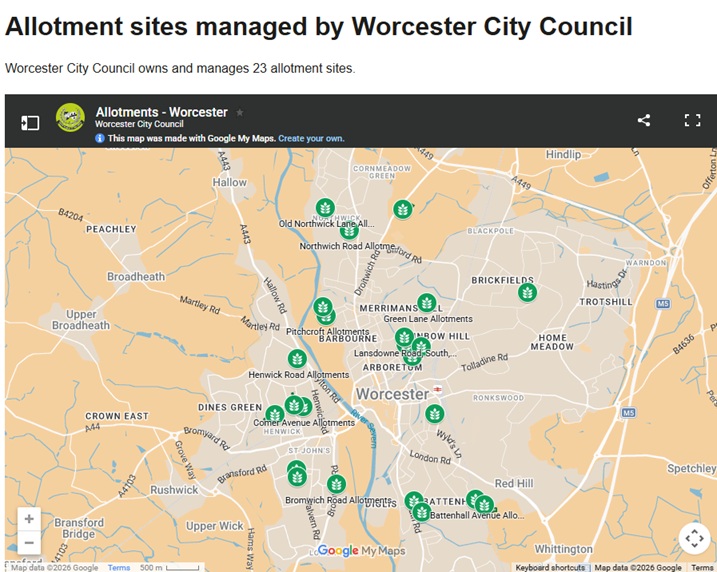
Understand the layout of the site Ensure you know your way in and out and can direct someone if needed. The site information is available on the main allotment webpage here - https://www.worcester.gov.uk/leisure-parks-allotments/allotments
- You can click on the green icons for each allotment site
- Once you have clicked on a green icon, the site name comes up to the left
- Press the arrow pointing to the right and this takes you to Google maps – providing exact address of the allotment site.
Clear access routes: Tenants must keep access tracks free of obstructions and hazards, such as overhanging branches or building materials, to allow emergency vehicle access.
Let someone know you're there: If visiting an allotment site alone, it is good practice to inform someone of your location and expected return time.
Carry a phone: Always carry a mobile phone to call 999 if necessary.
In an emergency - PLEASE CONTACT YOUR REQUIRED EMERGENCY SERVICE FIRST.
Providing location details: Emergency services have access and location details for each allotment site. When calling 999, it is crucial to provide the full address and postcode of the allotment site. If possible, please include your What3words location.
Emergency contact procedures: If an incident occurs, and you are with someone, meet the emergency services at the entrance gate to guide them, according to allotment safety guidelines.
Following emergency, please complete an Incident reporting form – these can be found on the website.
What3word access via QR code below:
|
|
|
|
|
|
|
|
|
Slow worms
What to look out for:
Slow-worms may look like small snakes, but they are actually legless lizards with eyelids and the ability to shed their tails to escape predators. They’re rarely seen basking in the open, preferring compost heaps, log piles and other sheltered spots. A good way to check for them is to gently lift a piece of roofing felt or corrugated tin placed in a quiet area on a warm day (and carefully replace it).
Slow-worms emerge in spring, with mating taking place in April and May. Females give birth to around eight live young in late summer. Adults can grow up to 30cm long and vary in colour: males are grey‑brown, often with blue spots, while females are brown with darker sides. Juveniles are golden with black bellies.
Worcester was once known as “Slow‑worm City” due to their abundance. If you have seen activity on your plot, the Worcestershire Wildlife Trust would love to hear from you, link below - Record your wildlife sighting.
Remember: slow‑worms are legally protected and must not be harmed.
|
|
|
|
Solitary bees
There are many different pollinators that pollinate our plants. Did you know the most effective pollinators are Bumblebees and Solitary bees.
Information & advice
Solitary bees live very differently from honeybees and bumblebees. Each female makes her own nest and provides food for her young, usually laying eggs in small holes found in soil, dead wood, plant stems or even gaps in brick walls. Many species are easy to spot in gardens and local green spaces if you take a moment to look.
What encourages solitary bees - A variety of nectar and pollen‑rich flowers
- Undisturbed soil, dead wood and hollow plant stems
- Sunny, sheltered spots
What allotment tenants can do - Grow a mix of flowering plants that bloom across the seasons
- Leave some areas undug or less tidy
- Keep hollow stems, logs or add a simple bee hotel
- Avoid using pesticides and weed killers
Small changes can make a big difference for these important pollinators.
|
|
|
|
|
Promoting a diverse and pest free plot:
We are sharing some guidance to help reduce and prevent rat activity across allotment sites, while also supporting our shared goal of promoting a healthy, biodiverse environment.
Rats are naturally attracted to places where food, shelter, and water are readily available, even small changes in how plots are managed can significantly reduce the likelihood of unwanted activity.
Allotments can provide valuable habitat for pollinators, beneficial insects, birds, amphibians, and other species that contribute to a thriving ecosystem. The key is balancing wildlife-friendly practices with sensible pest prevention measures.
Key recommended steps include: - Keep plots tidy: Remove debris, clear dense overgrown areas, and store materials off the ground. Create wildlife areas—such as small log or insect habitats—away from sheds and compost bins.
- Manage compost well: Turn compost regularly, keep bins secure, and avoid adding cooked food, meat, dairy, or household waste.
- Protect food sources: Harvest crops promptly, store seeds and produce in sealed containers, remove fallen fruit or vegetables, and avoid bird feeders on site. Support birds and insects by planting pollinator friendly flowers and incorporating hedgerows or native shrubs where appropriate.
- Secure structures: Seal gaps in sheds and greenhouses and check underneath for signs of burrowing.
- Reduce water and shelter: Remove standing water and keep grass and vegetation trimmed. Consider creating a wildlife pond, if you can actively manage this safely and ensure that it is away from buildings and compost areas.
- Monitor regularly: Look out for droppings, gnaw marks, burrows, or tracks and report concerns promptly.
By combining wildlife friendly practices with good plot hygiene, we can maintain a healthy, biodiverse, and pest resistant site for everyone.
|
|
|
|
Dogs on allotment sites
We kindly request that all dogs brought onto the allotment site in connection with a tenant are supervised, kept on a lead, and under control at all times.
If tenants allow dogs to be off leads, this presents a safety concern and constitutes a breach of the tenancy agreement.
Dogs must not be allowed to foul neighbouring plots under any circumstances, and tenants must ensure the responsible removal and appropriate disposal of dog faeces.
|
|
|
Deliveries to allotment sites
We kindly remind all tenants that any delivery to an allotment site must be pre‑approved by the Site Coordinator and/or the Council. If you are unsure whether a delivery is permitted, please contact your Site Coordinator in the first instance.
The Council is able to arrange deliveries of woodchip where required.
Please note that tenants who arrange their own deliveries assume full responsibility and liability. The Council strongly recommends that tenants obtain appropriate public liability insurance and complete a risk assessment before organising any contractor access.
Any damage caused on site by a contractor arranged by a tenant will remain the responsibility of that tenant.
To ensure site security, please do not provide padlock combination numbers or keys to delivery drivers or any third parties.
Thank you for your cooperation in helping to maintain the safety and smooth operation of our allotment sites.
|
|
|
|
We have some events planned for Allotment Tenants to access:
Save the dates!
May – Composting workshop – scheduled for Tuesday 19th May 2026 June – Fruit tree care and grafting session – scheduled for Wednesday 24th June 2026
Tickets and exact timings will be sent out soon. As with the previous event held in November - the events will be at the Guildhall and will be free ticket events.
Please keep an eye on Worcester City's Worcester City Council’s social media accounts and our allotment news webpage (link below) for more information closer to the time. |
|
|
|
|
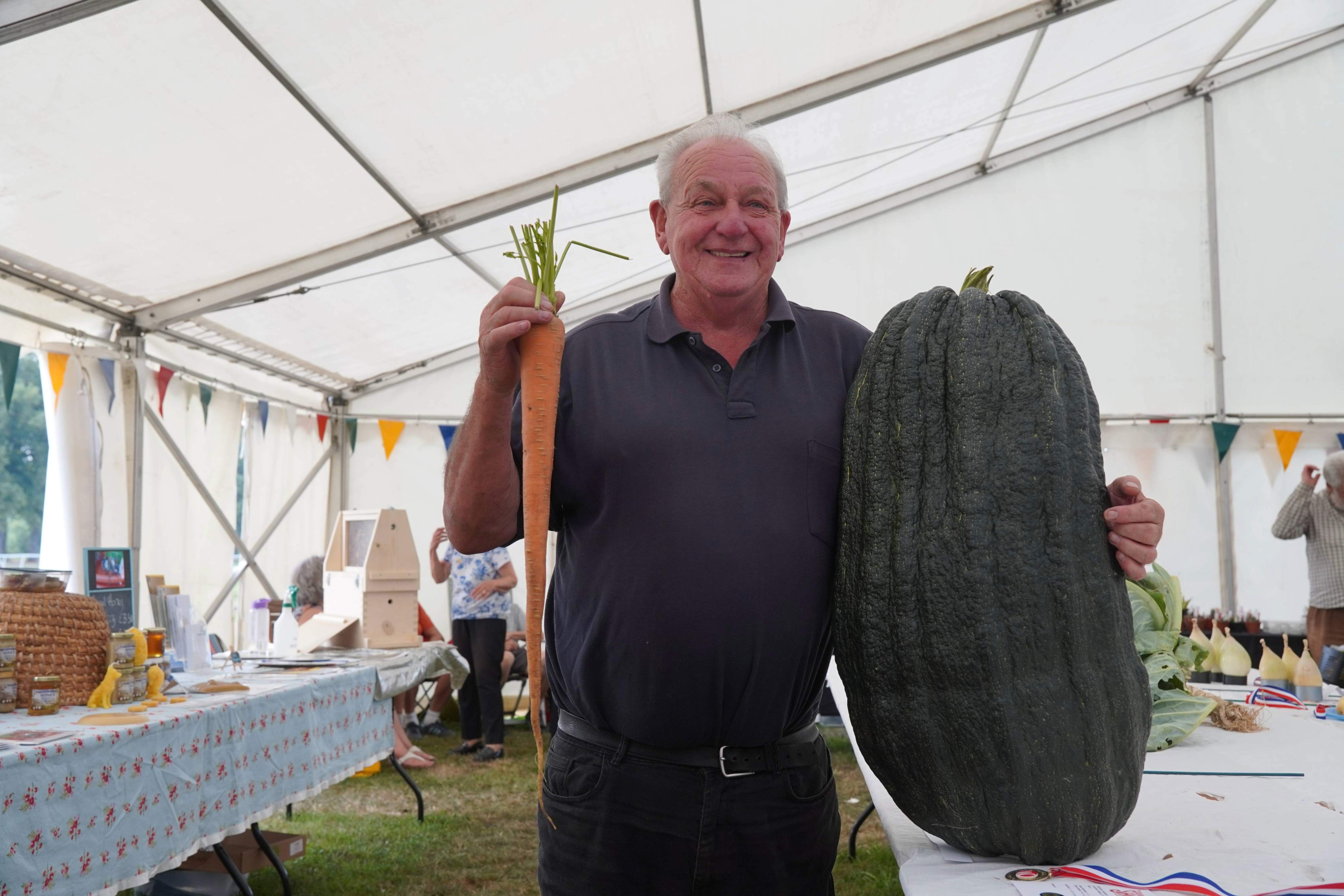
Competition entries for this year's Worcester Show are now OPEN.
This year's Show takes place on Sunday, 9 August between 10am and 5pm.
There are 14 sections and over 170 classes, ranging from flowers and floral decorations to handicrafts and photography,
There is something for everyone, including children and teenagers. No need to be an expert. Everyone is welcome to join the fun! |
|
|
|
Allotments and wellbeing
Find out more about what’s going on in the community, stay informed with local events, and find out more information.
|
|
|
|
All tenant updates
If you would like to stay informed, please see our all-tenant update, this is available shortly following our quarterly allotment site coordinator meetings.
|
|
|